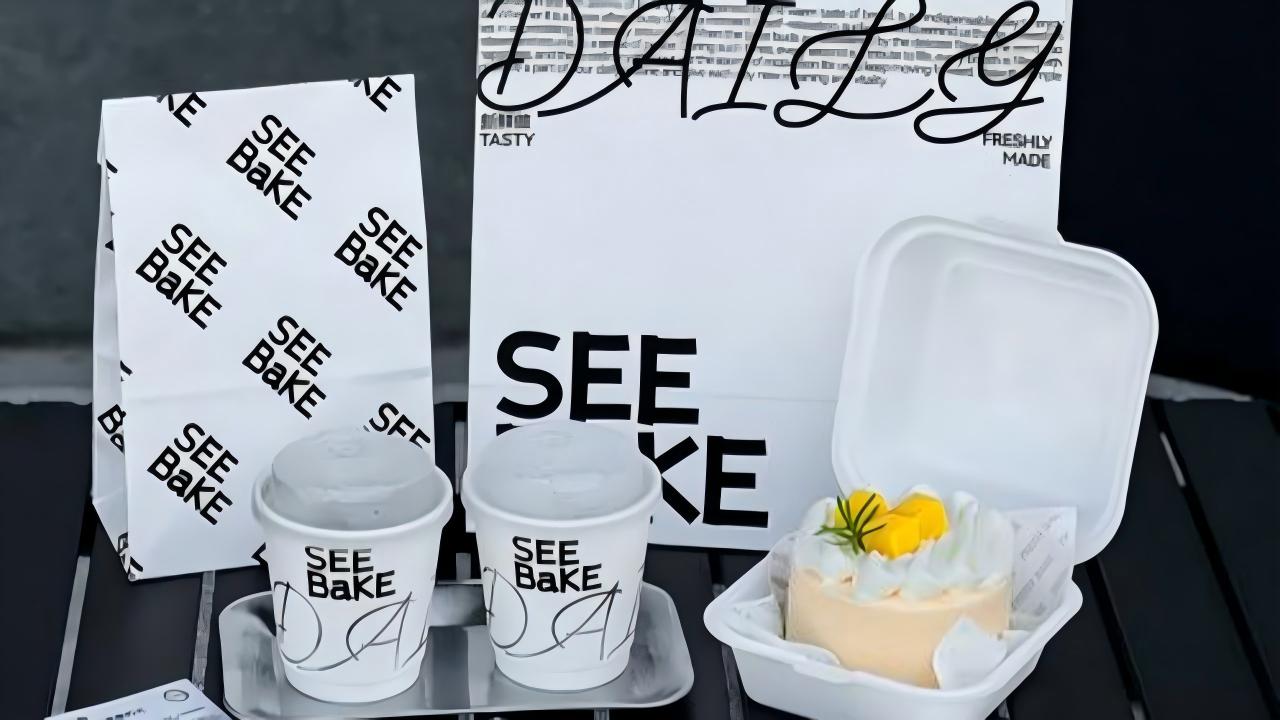
The spills, inconsistent portions, poor lid fit, and extra inventory are caused by choosing the wrong cup or bowl. This guide will help explain to you how selection is affected by capacity, dimensions, working volume, shape, and lids. Then you can match every size to your menu and service conditions.
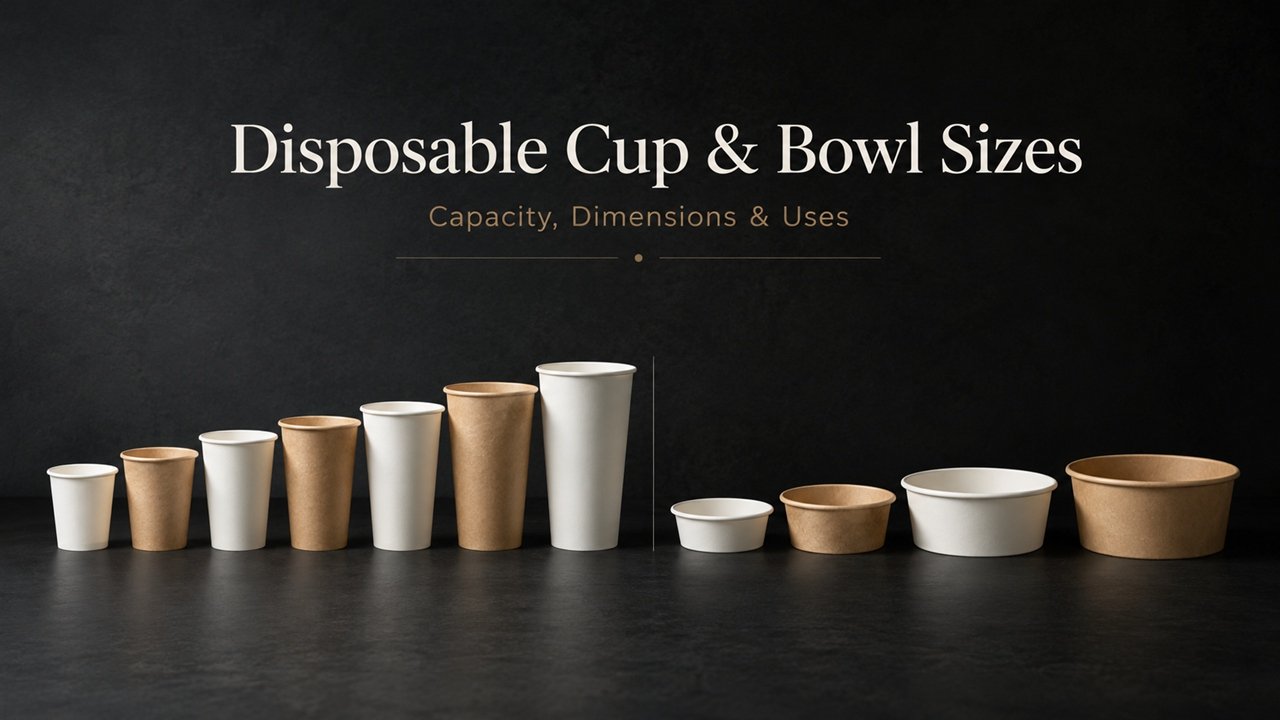
How Disposable Cup And Bowl Sizes Are Measured
In US fluid ounces, milliliters, or both, the capacity is usually provided by suppliers. One US fluid ounce is about 29.57 milliliters, as listed in NIST conversion guidance. The supplier figure may be rounded; however, you can use the NIST conversion for planning.
The imperial fluid ounce rate is about 28.41 milliliters; that’s why you shouldn’t confuse it with US and imperial fluid ounces. US fluid ounces are often used by supplier charts, but you should confirm the system first.
The shape of the container is not defined, but the capacity tells you how much a cup or bowl can hold in imperial fluid ounces. The container of two 12-ounce cups varies with the different heights, rim diameters, and base widths.
T/B/H measurements are often used in many datasheets. T describes the top diameter, B describes the bottom diameter, and H describes the height. Each dimension appears in the form of milliliters or inches whenever you check it.
Dimensions like T/B/H often describe the shape of a container when you list the capacities, which may refer to the brimful volume, and you must know the amount when you fill it to the rim. The volume of brimful is unstable or lower while serving because the space that is left in this volume is only for the use of lids, steam, ice, foam, sauces, toppings, and movement. For example, during normal service, the container with a 500ml brimful volume doesn’t provide us exactly 500ml volume.
Disposable Cup Sizes And Their Common Uses
Disposable cups always range from small testing cups to large beverage containers. The right choice always depends on things like lids, movement, steam, ice, foam, sauces, and toppings.
| Cup Size Range | Approximate Capacity | Common Uses | Main Size Check |
| 2.5-4 oz | 75-120 mL | Espresso, samples, sauces | Fill level and small rim |
| 5-8 oz | 150-240 mL | Tea, coffee, desserts | Recipe volume and lid |
| 9-12 oz | 265-355 mL | Regular coffee, juice | Headspace and grip |
| 16-20 oz | 475-590 mL | Large drinks, iced coffee | Rigidity and lid fit |
| 22-32 oz | 650-950 mL | Smoothies, soda, milk tea | Weight and transport |
The above capacities are not universal product standards; they are practical reference ranges. The exact dimensions always change between factors like factories, materials, shapes, and tooling.
Small Disposable Cups
Small disposable cup sizes vary from 2.5 to 4 ounces, which are suitable for things like espresso, tasting samples, sauces, and small desserts. These cups usually range between 2.5 and 8 ounces. The cups with the size of five to eight ounces work very well for the things that I have listed: tea, short coffee, water, and compact frozen servings.
The capacity of small disposable cups is used to control portions and to reduce waste. The simple beverage system in these cups will be more suitable for the single-wall paper cups, but the size you have selected for them should leave enough space for things like milk, foam, cream, toppings, and a matching lid.
Medium Disposable Cups
Medium disposable cup sizes or ranges vary from 9 to 12 ounces. These cups are used for things like regular coffee, tea, juice, hot chocolate, and moderate dessert servings. Their range provides you with more volume when you think it is now comfortable for holding.
If you want a hot drink, then the ripple wall paper cups in medium-sized cups will be beneficial for improving insulation and the grip. Before approving the size, you have to confirm the finished recipe, required headspace, rim diameter, and lid fit.
Large Disposable Cups
The sizes vary in large disposable cups because the usual size starts from 16 ounces. For large coffees and iced drinks, you have to use the size of 16 to 20 ounces. But for smoothies, soda, milk tea, and drinks that contain ice or toppings, you have to use 22 to 32 ounces.
These cups provide additional space, which supports larger portions and longer service times. When you see there is a product visibility issue, which matters for the PET plastic cups used for things like cold drinks, the cup that is filled should be tested for the strength of the wall, the lid security, and the stability that is present inside the carriers or delivery bags.
Disposable Bowl Sizes And Their Common Uses
Food volume is held by the disposable bowls without crowding the lid. Capacity mostly matters alongside the shape, depth, food weight, and transport movement.
| Bowl Size Range | Approximate Capacity | Common Uses | Main Size Check |
| 8-12 oz | 240-355 mL | Sides, desserts, small soup | Portion and lid clearance |
| 16-20 oz | 475-590 mL | Soup, noodles, small salad | Headspace and movement |
| 24-26 oz | 710-770 mL | Rice, pasta, meal bowls | Working fill volume |
| 29-32 oz | 850-950 mL | Large soup, salad, noodles | Transport and stacking |
| 1,000-1,750 mL | 34-59 oz | Large meals, sharing portions | Weight and carton space |
AS planning references, they treat the above bowl ranges. The actual size should be confirmed by your recipe, lid, and final container shape.
Small Disposable Bowls
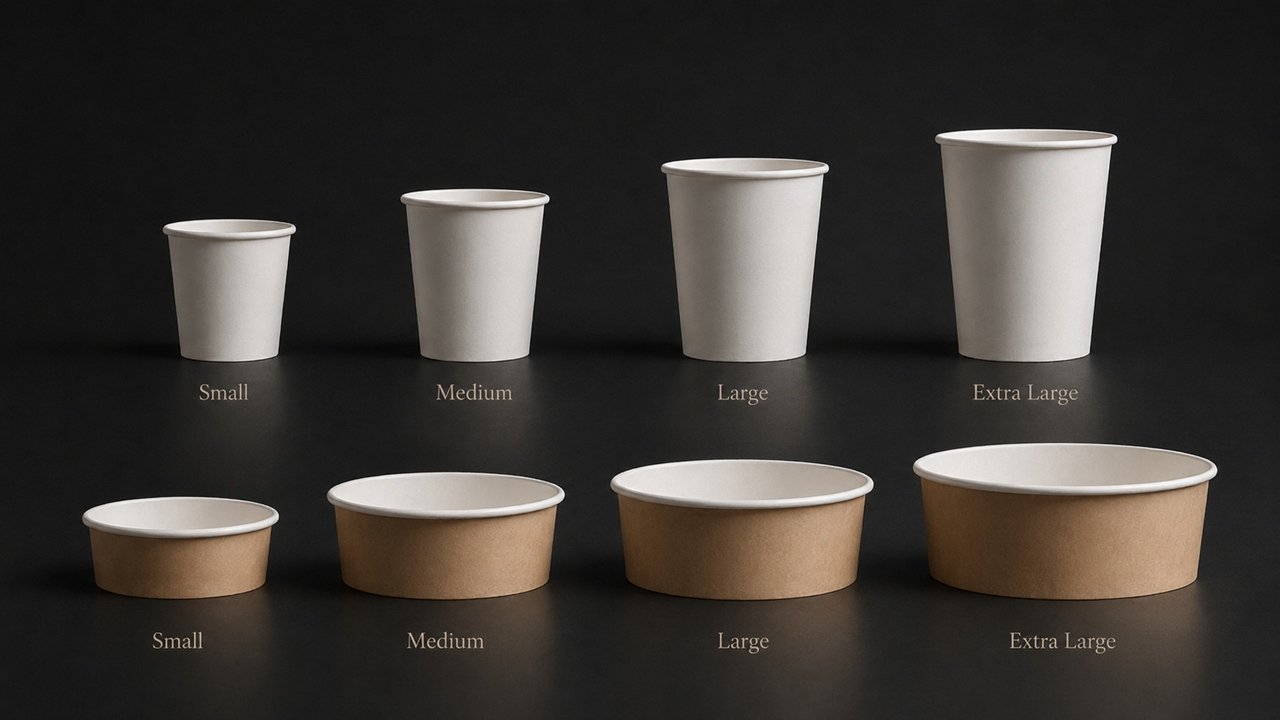
The range varies from 8 to 12 ounces for small disposable bowls. They are used for things like sauces, desserts, small soups, and compact ice cream bowls. The smaller bowls have smaller capacity, which is beneficial for light servings.
Check things like spoon access, garnish space, and the clearance of the lid while choosing small paper bowls because a narrow opening in it creates difficulty for you while eating.
Medium Disposable Bowls
The range for medium disposable bowls ranges from 16 to 20 ounces. They are used for things like soup, noodles, rice, pasta, fruit, and moderate salads. The size of these bowls provides you with comfortable takeaway handling.
The paper bowl soups, which are deep, can help to control the flow of liquid, while the wider bowls are used for displaying toppings more clearly. Test the meal with items like noodles, steam, and garnishes with its lid because it needs more clearance from the liquid form meals.
Large Disposable Bowls
The range for large disposable bowls ranges from 24 to 32 ounces, but for your knowledge, extra-large bowls vary in size from 1,000 to 1,750 milliliters. These bowls are used for ramen, poke, large salads, rice dishes, mixed meals, and for sharing portions.
The extra capacity in these bowls for food supports the meals for the generous presentation. When you are comparing these bowls with paper bowls, test stacking, delivery stability, lid security, and storage requirements before approving.
How Container Shape Affects Usable Size
The shape of the container changes with the looks, fits, and performance of capacity. The tall container appears larger, but the wider containers are used for easier access to contents.
Round Containers
The round shape containers are usually tall and narrow or short and wide. Round bowls are deep for soups and for shallow toppings. The deeper bowls are used for controlling the liquid movement.
Square And Rectangular Containers
Square and rectangular bowls are used for a wider presentation, and it also uses the shelf or space in cartons differently. The corners and footprints of these containers affect lid selection, stacking, and sealing.
Special-Shaped Containers
Some special-shaped containers, like oval-shaped containers, are used for improving presentation, which may require some dedicated lids and settings in their equipment. Test all special containers in shelves, carriers, sealing machines, and cartons after comparing the top dimensions, base dimensions, and height.

Match The Size To Your Food Or Drink
Choose the size of cups and bowls according to your serving. You have to measure the recipe and the working space that is needed for closing, handling, and delivery.
Allow Space For Ice, Foam, And Toppings
The stated capacity is used for things like ice, foam, fruit, and toppings, but these foods leave less space for liquid. Always select those cups that hold the full recipe without reaching the topline.
Try to prepare the drink in a sample cup first, then you have to fit the intended lid in it. Before approving the size, you have to check the access of the straw; whether it is comfortable or not for drinking. Like these, you have to check the space inside the soup or sauced food’s bowls or cups.
Allow Space For Soup And Sauced Food
At brimful capacity, never plan soup or sauced food. Liquid is pushed against the lid when you see movement during closing, carrying, and delivery.
Things like steam, noodles, garnish, and stirring leave enough space. Finished container weight is often increased due to the dense food.
For visible toppings, always use wide bowls, but you have to know liquid movement is often controlled due to deeper bowls. Always choose those shapes that match your complete dish.
Test your meal when you plan your delivery intervals. During transport, rigidity is changed by heat, oil, and moisture.
Test The Actual Portion
During testing, always use the food weight, real recipe, and the serving tools. Every product cannot be represented with water alone.
Check the viewing angle of the customer to know how your portion looks from there. The size of the selection should appear full without creating a spill risk.
Different staff members will be used for repeating the tests. Consistency across shifts will be improved by using a clear fill line or serving tool.
Match The Rim Diameter With The Lid
A lid for the rim diameter and rim profile is not stated, only its capacity. Two different cups or bowls with different diameters require different lids, no matter if they have the same volume. If the fit is not good, then you see problems like loose closures, sealing difficulty, or leaks during takeaway or delivery.
Test things like closing force, leakage, stacking, removal resistance, and normal handling before approval, while treating the paper cups with lids as a complete system. Many different-sized bowls or cups share their lids if they have similar diameter or dimensions, but only after the confirmation of the supplier.

Build A Practical Size Range For Your Business
Not every bowl or cup size is needed by you all the time. Faster service and simpler purchasing are usually supported with the help of a focused range.
The actual working volume is used for the group menu items. Several related products are served by the container after identifying them.
A cafe that you see mostly uses two hot cup sizes and two cold cup sizes. Across multiple types of meals, a restaurant uses at least three bowl sizes.
The carton, lid, artwork file, forecast, and minimum order are created for every extra size. The size of slow-moving can be used for trapping the space for storage.
A new format is added after reviewing the volume of sales. A clear serving and operational problem should be solved by a special size.
The staff training should be simplified, and it can reduce the stock lines by sharing the lids. Always try to use the rim families which are compatible where you see it is practical.
Confirm the capacity of the warehouse and carton quantities. Large bowls must be used to consume the space faster than the count of their unit suggests.
Approve Your Final Cup And Bowl Sizes
Place a bulk order after completing a physical approval. Samples, lids, recipes, and handling conditions are used for the production-equivalent.
Check the following points:
- Confirm the volume of the actual serving.
- For ice, foam, toppings, steam, and movement, you need to add space.
- Always check things like top diameter, bottom diameter, and height.
- The final container is often checked by testing the matching lid.
- Confirm these things for compatibility, like filling, sealing, and dispensing equipment.
- Inside storage and delivery areas, you have to check stacking.
- Carriers, bags, shelves, and cup holders should be tested.
- Carton quantity and warehouse space should be confirmed first.
- For every selected size, you must approve artwork.
- For staff, try to record the final fill line.
Lid code and the container code should be approved together with the help of a document. During the repetition of orders, these steps will be used to reduce purchasing errors.
FAQ
Can One Artwork File Fit Several Cup Or Bowl Sizes?
Every size needs a complete or its own dieline; however, one design can be used for the complete range. A separate adjustment is required for the text, logos, and safe areas.
Can You Order Custom Cup Or Bowl Dimensions?
For suitable volumes and order quantities, many manufacturers are used to support custom dimensions. Before approval, confirm the minimum orders, lids, equipment, samples, and tooling.
Are Container Dimensions Measured Inside Or Outside?
Top diameter, bottom diameter, and height are usually listed by the supplier charts. On the technical drawing, first confirm whether they are real external dimensions. Methods of measurement also vary.
How Many Cups Does A 16 Oz Container Hold?
A 16 OZ container holds approximately 2 US cups or 473 milliliters.
Are Fluid Ounces And Ounces By Weight The Same?
No, these two are two different things because fluid ounces measure volume, but ounces are used for measuring weight. You are not capable of making any changes in it without knowing the density of the product.
Is This Size Right For Your Project?
Choose all things like capacity, dimensions, working space, and lids as one system. Before production, test your complete serving. To discuss suitable options, share your menu, size requirements, and quantities through Haokelao’s contact page.