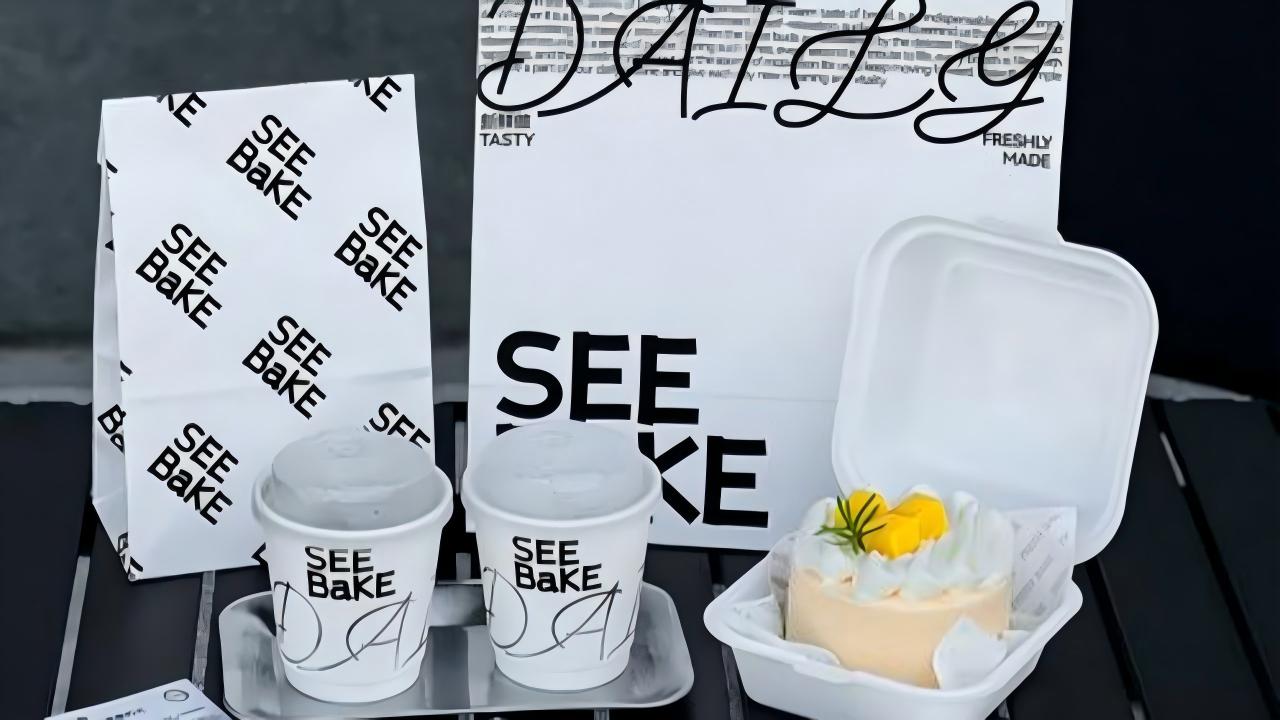
Global summer heat boosts demand for ice‑cream paper cups. Their coating affects experience, compliance and cost via waterproofing, cold resistance, safety and more. This guide details coating types, scenarios and procurement to prevent leaks, export detentions and overspending.

1. What is the coating on ice cream paper cups ?
1.1 Definition of Ice Cream Paper Cup Coating
The inner wall of ice cream paper cups is coated with a functional barrier coating. This coating, applied using a film-coating or water-based process, covers the paper fibers. Used for serving high-oil, high-moisture, low-temperature desserts like ice cream and frozen yogurt, it prevents ice water, milk fat, and sugar from corroding the paper cup.
Regular hot beverage paper cups are only suitable for hot water between 60 and 95 degrees Celsius. Ice cream paper cups must withstand freezing at 18 degrees Celsius and melting liquids at 0 to 10 degrees Celsius. Therefore, they require higher standards of low-temperature resistance, water resistance, and oil resistance; the raw material formulas for ice cream and ice cream cannot be mixed.
1.2 Four Core Functions
( 1 ) Long-lasting anti-leakage : It can easily soften ordinary paper when melted ice water, and the dense coating can support 2-4 hours of standing. It does not leak water during takeout delivery and maintains the cup’s firmness .
( 2 ) Oil and fat resistant : prevents the oil from cream or sauce from penetrating the cup wall, prevents the inner wall of the ice cream cup from turning yellow, and prevents the ink on the surface of the cup from leaking and contaminating the dessert.
( 3 ) Low temperature stability without cracking : The qualified special coating can be frozen for a long time at -20℃ , and the ice cream cup will not peel or become brittle after repeated freezing ;
( 4 ) Food safety and printing protection : It meets the relevant food contact standards at home and abroad, can not only isolate impurities in the pulp, but also protect the outer layer of printing on the cup body to prevent the pattern from blurring and fading.
1.3 Mandatory Compliance Testing Standards
Exporting to Europe and America requires FDA food contact certification, EU EN13432 compostability certification, and ISO production system certification. Reliable factories provide test reports for each batch of goods, avoiding recycled plastics and harmful coating materials like PFAS.

2. What are the different types of coatings for ice cream paper cups ?
The mainstream commercial coatings on the market are PE coating, PLA bio-coating, water-based plastic-free barrier coating, and PBS composite bio-coating. Edible wax coatings are only for short-term tasting cups and are not suitable for regular packaging.
2.1 PE Polyethylene Coating (General Basic Type)
Using an extrusion coating process, food-grade polyethylene is fused and bonded to the paper wall at high temperature, with a coating thickness of 12-25μm. It is available in single-sided and double-sided coating options. Added cold-resistant additives make it suitable for long-term cold storage, and a thicker version is specifically designed for high-fat sauces and desserts. The raw material is non-renewable petroleum-based plastic, making it the most widely used coating process in domestic discount stores.
2.2 PLA Polylactic Acid Bio-coating (Export-grade Environmentally Friendly Version)
The coating process is the same as that of PE, and the raw material is plant-based polylactic acid derived from corn and cassava starch fermentation. It contains no petroleum components, has higher coating transparency and a delicate feel, and can be matched with biodegradable cup lids of the same material. It is mainly targeted at the export environmental protection market and can only be degraded in industrial high-temperature environments.
2.3 Water-based plastic-free barrier coating (plastic-free and recyclable version)
Unlike plastic film coating, it uses food-grade water-based emulsion to penetrate paper fibers and is dried to form a micron-level resin barrier layer. It does not have an independent plastic film and comes in two formulas: waterproof and oil-resistant. It does not contain PFAS harmful substances and is the main alternative promoted by cities in China that restrict plastic use. It has the best recycling and degradation performance.
2.4 PBS Composite Bio-Coating (High-End Hot and Cold Dual-Use Version)
Most of them are co-extruded composite coatings of PLA and PBS, which retain biodegradable properties and greatly improve high temperature resistance, oil resistance and bending resistance, making up for the shortcoming of pure PLA being easy to soften at high temperatures. They are mostly used in high-end handmade Italian ice cream. The raw materials are also plant fermentation biomaterials.
2.5 Edible wax coating (for niche taste tests only)
It is inexpensive, but its temperature resistance is limited to 60°C. The wax layer will mix into the food after the ice cream melts and heats up. It is only suitable for 3oz mini tasting cups and is prohibited for takeout, freezing, and large-capacity packaging. It is not intended to be the main packaging for stores.
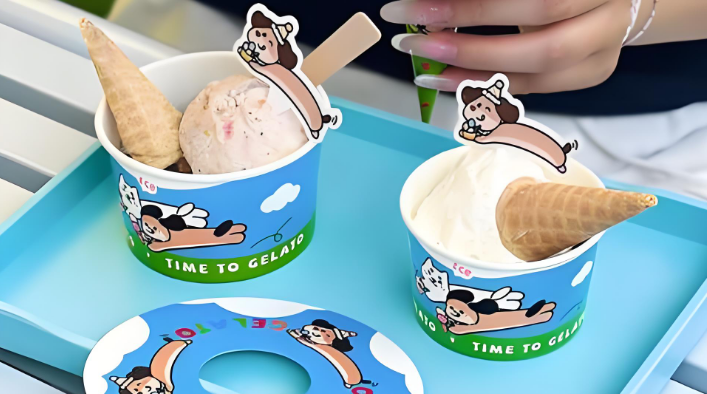
3. Application scenarios of ice cream paper cup coating
3.1 PE film coating
Suitable for : Domestic affordable cold drink shops, night market vendors, scenic spots and amusement parks; large-capacity high-fat sundaes; high-volume chain stores in areas without mandatory plastic restrictions; short-term dine-in service and bulk ice cream repackaging.
Not suitable for : European and American export markets with plastic restrictions; high-end dessert shops that emphasize environmental protection; shopping malls that require unified waste paper recycling.
3.2 PLA Bio-coating
Suitable for : Supermarkets exporting to Europe, America, Australia, and the Middle East; trendy chain stores and self-service yogurt shops emphasizing sustainability; high-end shopping mall stores; pre-packaged frozen ice cream in supermarkets with complete biodegradable packaging.
Not suitable for : Third- and fourth-tier cities without industrial composting facilities; street vendors with extremely low costs.
3.3 Water-based, plastic-free barrier coating
Suitable for : Stores in major plastic-restricted cities such as Beijing, Shanghai, Guangzhou, and Shenzhen; Italian ice cream shops that emphasize plastic-free and environmentally friendly products; shopping malls’ unified waste paper recycling channels; hot and cold dessert containers; plastic-free scenic spots and school canteens.
Not suitable for : Outdoor stalls exposed to long-term high temperatures; low-price bulk wholesale channels.
3.4 PBS Composite Biocoating
Suitable for : High-end handmade gelato and homemade ice cream; stores selling both hot and cold desserts; desserts in hotels and Western restaurants; export orders from high-end supermarkets in Europe and America.
Not suitable for : Inexpensive street stalls and low-cost fast food and beverage shops.
3.5 Edible wax coating
Suitable for tasting at trade shows or in stores.
4. Comparison of the degradation performance of various ice cream paper cup coatings
Three types of environmental protection concepts are easily confused during procurement. Incorrect selection can lead to export seizures and false advertising risks. The degradation characteristics of the four mainstream coating types are as follows:
(1)PE coating : completely non-biodegradable, will not decompose for hundreds of years in landfills, and is prone to producing microplastics; cannot be directly thrown into waste paper recycling, requires professional factories to separate the film layer, and there are no supporting recycling channels in most parts of China, only suitable for the domestic market without environmental control.
(2)PLA bio-coating : It can completely degrade in 180 days in an industrial composting chamber at 55-70℃; it degrades very slowly in ordinary landfills and household garbage cans, resulting in plastic pollution; recycling requires special equipment to separate the plastic film, so it is not recommended to promote it if the store does not have an industrial composting recycling channel.
(3)Water-based plastic-free barrier coating : It has the best overall environmental performance. The coating resin dissolves automatically when it comes into contact with recycled hot water, and the paper fibers are completely recycled. It can be directly put into ordinary waste paper boxes. It degrades in 90-120 days for industrial composting and naturally decomposes in six months to one year for household composting at room temperature. It is free of microplastics and petroleum raw materials throughout the process, and is compatible with domestic plastic restriction policies and multiple export channels.
(4)PBS composite coating : Degradation conditions are the same as PLA, and it can be completely decomposed only by industrial high-temperature composting; it degrades slowly in room temperature landfill, but its high-temperature environmental stability is better than pure PLA, making it suitable for high-end stores in the summer.
Degradation Capacity Summary Table
| Coating type | Biodegradability | Convenience of recycling | Degradation conditions | Microplastic risks |
| PE laminate | Non-degradable | Only professional factories recycle | none | high |
| PLA coating | Industrial compost is biodegradable | Membrane recovery required | Industrial composting bins above 55℃ | Composting with no residue meets standards |
| Water-based plastic-free coating | Biodegradable for both industrial and household use | Direct recycling of ordinary waste paper | Both ambient temperature and high temperature composting are possible. | none |
| PBS composite coating | Industrial compost is biodegradable | Membrane recovery required | Industrial composting bins above 55℃ | Composting with no residue meets standards |

5. Advantages and disadvantages of different ice cream cup coatings
5.1 PE Polyethylene Coating
Advantages: The price is the lowest among all categories, saving 25%-40% compared to PLA of the same specifications. It performs stably in freezing conditions down to -20℃, with balanced waterproof and oil-proof properties. Various printing processes can be performed, the factory maintains a large stock, and delivery can be completed in 3-7 days. Minimum order quantity requirements are low, and a full range of matching plastic cup lids is available.
Disadvantages : It cannot biodegrade naturally, recycling is troublesome, and many European and American countries have restricted its import. It cannot be used for environmental protection propaganda. Discarding it produces microplastics, which contradicts long-term plastic reduction policies.
5.2 PLA Polylactic Acid Bio-coating
Advantages : Internationally certified compostable, making it a mainstream choice for eco-friendly supermarkets overseas; allows for marketing through plant-based and petroleum-free packaging, enhancing product value; coating does not crack during long-term cold storage; high transparency and premium display appearance.
Disadvantages : Procurement cost is 30% higher than PE; easily softens and deforms in environments above 60℃, unsuitable for open-air stalls without air conditioning; degradation relies on industrial composting, potentially leading to violations of environmental advertising regulations; recycling requires specialized equipment and cannot be processed through ordinary waste paper channels.
5.3 Water-based non-plastic barrier coating
Advantages: Environmentally friendly and suitable for various scenarios, aligning with domestic plastic restriction policies. PFAS-free, making it safe and compliant for use in baby stores and organic dessert shops. Freeze-resistant, and can also be used briefly for hot drinks, offering multiple uses per cup. Can be recycled directly as regular waste paper, simplifying waste sorting in stores. Easier to meet standards and pass bidding processes in scenic spots, schools, and government projects.
Disadvantages : It’s more expensive than PE coating but slightly cheaper than PLA. Its waterproof performance will slightly decrease if exposed to 40℃ sunlight for more than 8 hours. Small packaging factories may not be able to replicate its mature processes; sourcing from large manufacturers is more reliable.
5.4 PBS Composite Biocoating
Advantages: It has a temperature resistance range from 20℃ to 70℃, compensating for PLA’s weakness to high temperatures. It has strong resistance to oils and fats, preventing high-fat ice cream from yellowing even after prolonged storage. It is less prone to breakage or leakage during takeout transportation. It meets both European and American requirements for compostability and high-temperature use.
Disadvantages: The cost is the highest among these types of ice cream paper cup coatings , 15% to 20% more expensive than PLA . Market demand is not large, stock is limited, and custom orders require an additional 5 to 10 days. It is only suitable for high-end, high-premium dessert brands.
FAQ
1.Can you put ice cream paper cups in the freezer?
Yes, but only if the cup has a strong coating (like PE or PLA) and uses thick paperboard (250gsm or more). Standard paper cups without proper coating will become soggy and collapse in the freezer.
2.What is the difference between PE coating and PLA coating?
PE is a petroleum-based plastic, which is waterproof and inexpensive but non-biodegradable; PLA is a plant-based material extracted from corn starch, which is biodegradable through industrial composting but is 30%-50% more expensive.
3.Does a water-based plastic-free coating really contain no plastic?
It is not completely plastic-free. The water-based coating uses a water-based polymer dispersion with a polymer content far lower than that of PE and PLA. The coating amount is only about 6g/㎡ (PE requires more than 15g/㎡), and it can be directly recycled with the paper.
4.Will PLA paper cups decompose if thrown into a regular trash can?
No. PLA requires industrial composting facilities at 55-70℃ to degrade; it degrades extremely slowly in ordinary landfill environments, becoming similar to plastic.
5.Which coating should be used for ice cream paper cups exported to Europe and America?
For export to countries with plastic restrictions, such as Europe, the United States, and Australia, PLA coatings or water-based plastic-free coatings with EN13432 or ASTM D6400 certifications must be used. Ordinary PE paper cups may be intercepted by customs.
Conclusion:
Choose PE-coated paper for high-volume, affordable domestic sales; opt for water-based, plastic-free coatings for stores subject to plastic restrictions; select PLA for exports requiring compostability; and use PBS for high-end applications involving frequent exposure to hot and cold temperatures. Whether you are setting up a new store, redesigning packaging, handling foreign trade, or sourcing for events, Please visit the official Haokelao website to inquire about customized solutions and samples.
About The Author:
Jason Fu
Hi, I’m Jason Fu, General Manager, Marketing Director, and SEO Expert at Haokelao. With over 20 years in the paper food packaging industry, I bring deep expertise in export trade and a strong passion for SEO and marketing. Whether your questions are about paper food packaging products, or marketing strategies, I’m here to help and exchange ideas. Let’s connect!